

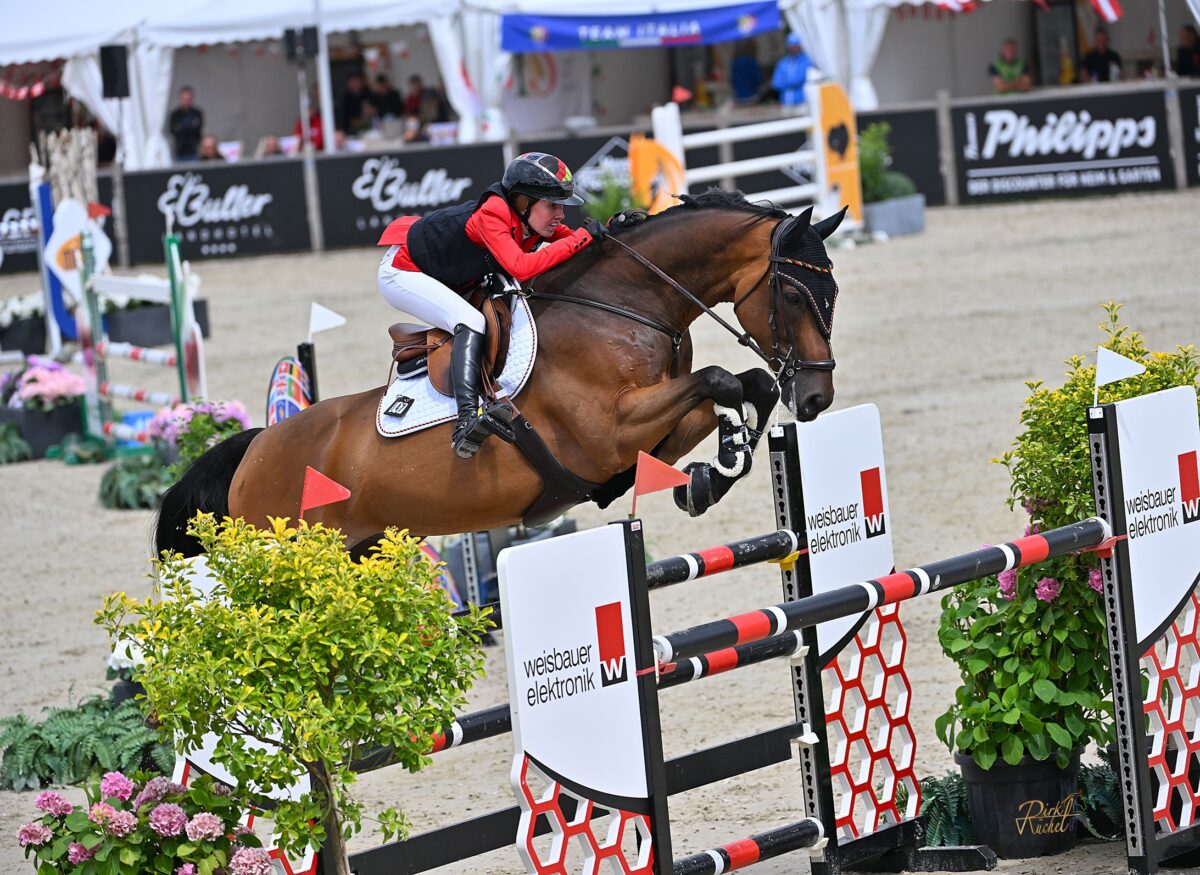
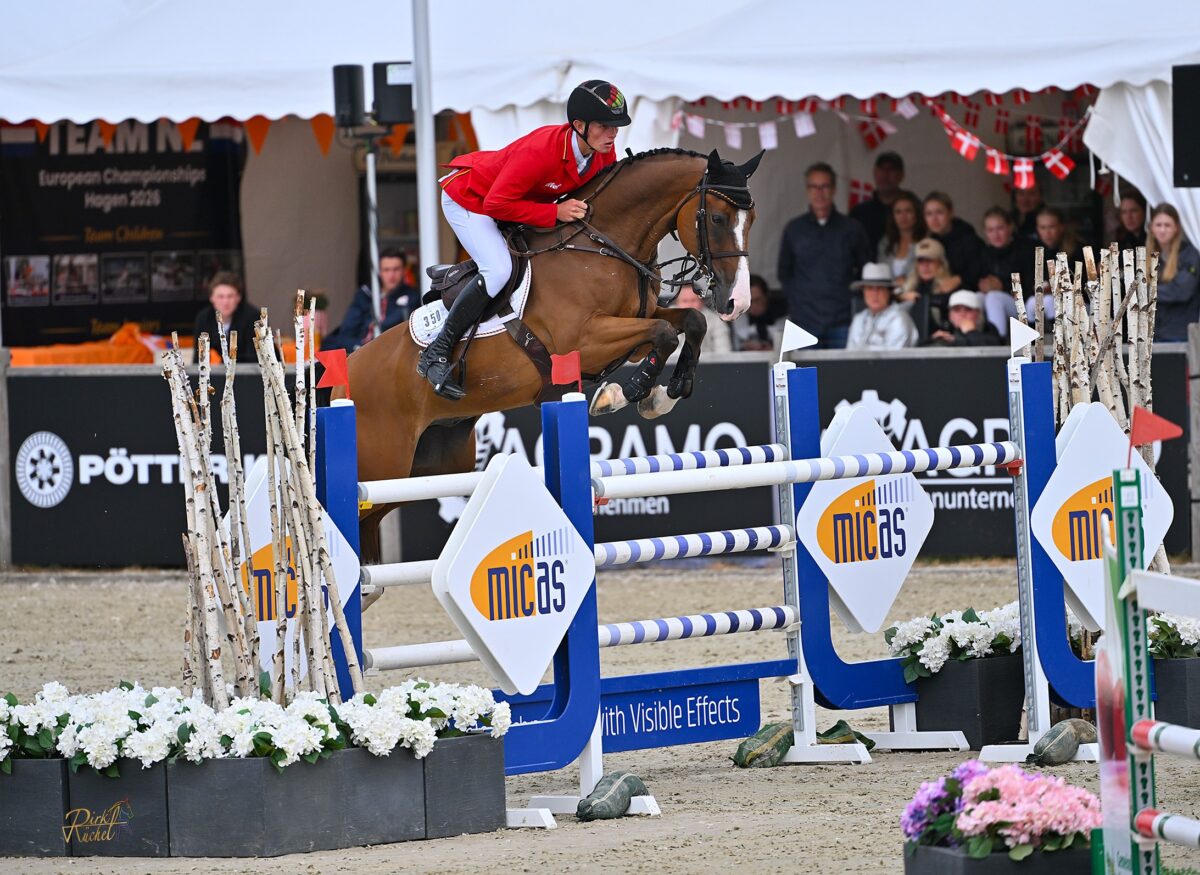
Michaels-Beerbaum, Mansur, Gaudiano, O’Connor, Breen, Houtzager, Kühner, Sprehe, Stormanns, Pisani or Thomsen – numerous names are featured on the starting lists of the FEI Jumping European Championships for Young Riders, Juniors and Children in Hagen a.T.W., which are long established in the international show jumping world. Many of the young riders come from successful equestrian families.
But how big is the advantage of a famous surname really?
That children who are successful riders with other qualifications start in the sport is beyond question. They grow up in the stables, experience international tournament sports from an early age, and benefit from the experience of their families. At the same time, the question arises as to whether this advantage actually carries over to the championship level.
The concentration of prominent names in the German junior team is particularly evident. Brianne Beerbaum is the daughter of world and European champion Meredith Michaels-Beerbaum and Markus Beerbaum. Jolie Marie Kühner comes from the family of Olympic athlete Max Kühner. Lennard Tillmann is the son of Derby winner Frederic Tillmann, Markus Merschformann won team gold at the European Championships in 1997 and Tony Stormanns is the son of the internationally successful show jumper and trainer Helena Stormanns.
For Bundestrainer Eberhard Seemann, this combination is nevertheless an exception. For the first time, a complete German junior team consists exclusively of riders from well-known equestrian families. However, he does not see a general trend in this. In recent years, young riders from less well-known or even no equestrian families have regularly qualified for championships.
Between privilege and pressure to perform
Seemann does not deny that children from professional equestrian families benefit. They often start riding at an early age, experience top horses in everyday life, and therefore quickly develop a broad understanding of horses. Nevertheless, he disagrees with the common statement that these riders generally have it easier. Especially families who earn their livelihood through horses must think economically. If a horse develops particularly successfully, a sale may become necessary – even if the horse is important for the sporting path of the child’s own child. Families outside the professional horse trade, on the other hand, are sometimes able to purchase and maintain a suitable horse for the long term.
„Getting into the saddle too early does not automatically mean the next step is easier,“ says Seemann. The start is easier, but championship-level success is far more than just the family name. The example of Malte Merschformann shows how little a famous surname guarantees a championship horse. His European Championship partner Blue Water does not belong to the family; it was provided to him. Especially successful horses often change owners in international sport. For young riders, this means that a promising partnership can end at any time. The decisive advantage lies not only in having access to good horses, but in being able to develop them together over the years.
A famous family name also comes with a downside. Successes are often taken for granted, whereas setbacks are perceived all the more intensely. Young riders not only have to prove themselves athletically, but at the same time emancipate themselves from their parents’ achievements. That is also why Seemann disagrees with the general assumption that riders from well-known families have it easier. They did benefit from their environment, but they also had to deal with considerable pressure to perform.
Experience that everyone benefits from
In team sports, the experience of successful equestrian families can nevertheless be a benefit to the entire team. Parents who have themselves experienced championships or the Olympic Games bring valuable knowledge that the team can also benefit from. However, a functioning team spirit is a prerequisite. Therefore, the German team management places great emphasis on the fact that the riders do not act as individual competitors. „We want to pull together as a team for this week,“ says Seemann. „This team spirit is ultimately an important foundation for success.“
As in senior sports, in the youth sector too the team standings take priority at first. It is precisely here that Seemann sees an important component of training: young riders are to learn to take responsibility not only for their own round, but also for the common success. The European Championships in Hagen thus show two sides of the same coin. A well-known name can open doors and facilitate entry.
However, whether an international career can be built from this depends ultimately on talent, the right horses, hard work – and sometimes even the necessary dash of luck.